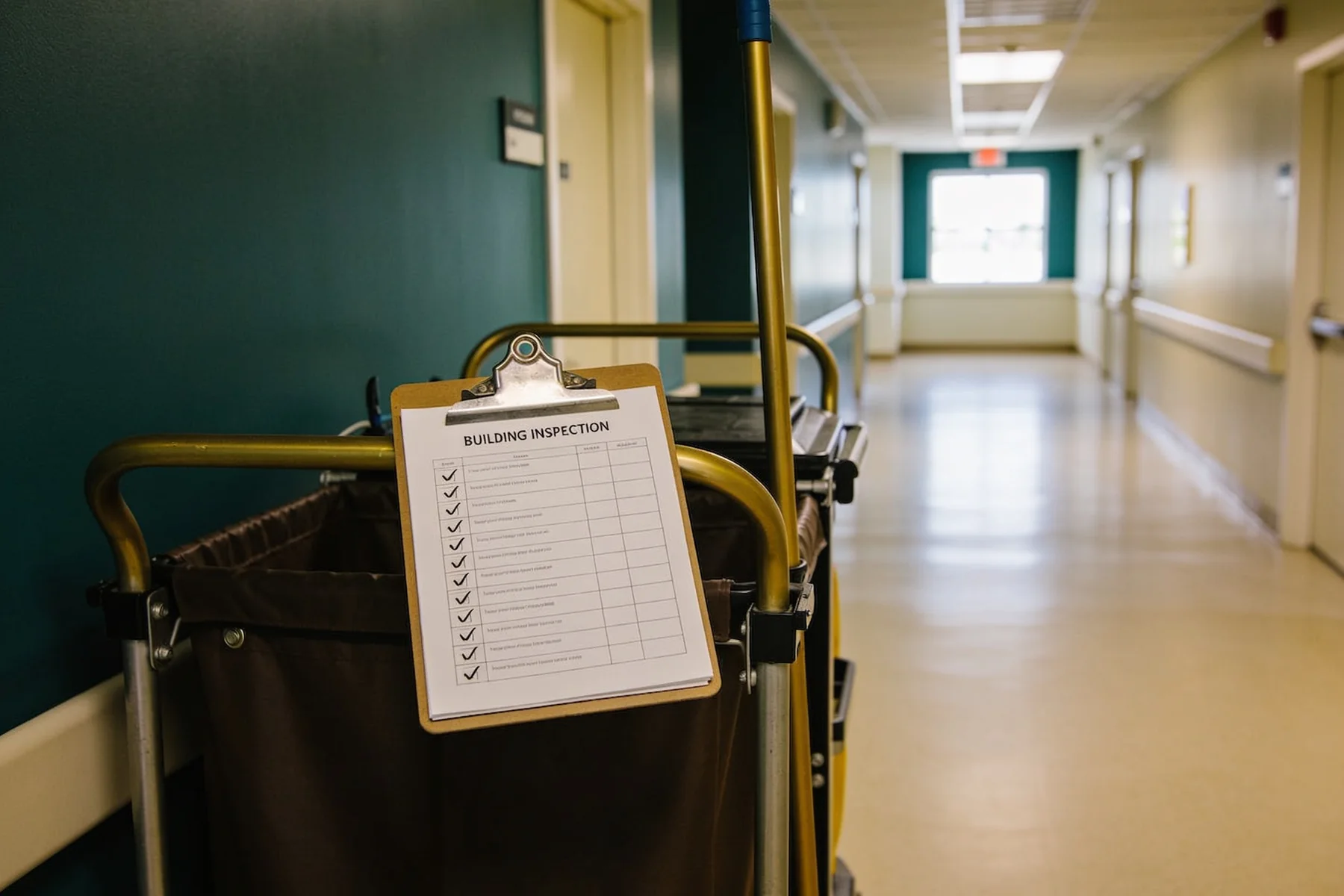
A working office cleaning checklist has four frequencies on it: nightly tasks (trash, restrooms, high-touch surfaces, vacuuming), weekly tasks (detail dusting, glass, edges), monthly tasks (vents, baseboards, upholstery) and quarterly tasks (floor care, carpet extraction, light fixtures). Below is the full list, organized so you can hand it to a crew or attach it to a bid.
There is a fifth thing that belongs on it and almost never appears, which is the part this page is really about. We will get to it after the list.
Nightly
These are the tasks that get noticed within a day if they are skipped. Trash and restrooms are the two that generate complaints fastest in any commercial building, and high-touch surfaces are the ones people ask about but rarely check.
Restrooms
- Empty waste receptacles and replace liners
- Clean and disinfect toilets, urinals, and the fixtures around them
- Clean and disinfect sinks, counters, and faucet handles
- Restock toilet paper, paper towels, and soap
- Clean mirrors and any glass
- Sweep and mop the floor, including behind the door and along the baseboard
- Wipe partition doors, latches, and dispenser fronts
Common areas and offices
- Empty all waste receptacles and replace liners as needed
- Vacuum all carpeted traffic areas
- Sweep and mop hard floors
- Disinfect high-touch surfaces: door handles, push plates, light switches, elevator buttons, handrails, shared keyboards and phones
- Wipe down conference tables and reception surfaces
- Spot clean entry glass, including fingerprints at handle height
- Clean and restock break room counters, sinks, and the front of the refrigerator and microwave
- Set chairs, straighten reception, and turn off lights on the way out
Weekly
Weekly work is the layer that separates a building people describe as clean from a building where only the obvious things get done. None of it is urgent on any given night, which is exactly why it is the first thing dropped when a crew is short-staffed.
- Detail dust horizontal surfaces including sills, ledges, and the tops of partitions and file cabinets
- Dust monitors, desk edges, and equipment surfaces
- Clean interior glass, partitions, and entry doors fully
- Damp wipe baseboards in high-traffic areas
- Vacuum carpet edges and under desks
- Disinfect break room appliance handles and interiors as needed
- Wipe down trash receptacles themselves, not just the liners
Monthly
Monthly items are the ones your crew should be scheduling without being asked. If you have to point them out, they are probably not on anyone’s calendar.
- Dust air vents, diffusers, and return grilles
- Detail baseboards throughout
- Vacuum or spot clean upholstered furniture
- High dust light fixtures, ceiling corners, and sprinkler heads
- Clean interior window sills and frames
- Damp wipe interior doors and door frames
- Machine scrub restroom floors and grout lines
Quarterly and as scheduled
Floor care is the biggest line on this list and the one that most affects how a building looks over a period of years. It also tends to be the item quietly dropped from a low bid, because it is expensive and nobody misses it for the first six months.
- Carpet hot water extraction in traffic areas and common spaces
- Strip and refinish VCT, or burnish on the schedule the finish requires
- Deep clean tile and grout
- Clean exterior-facing glass at ground level
- Pressure wash entries, walkways, and dumpster areas
- Detail clean furniture and partition fabric
Ask any company bidding your building whether floor care is inside the monthly price or billed separately. Both answers are legitimate. Not knowing which one you agreed to is what causes the argument in year two, and it is one of the biggest swings in what commercial cleaning costs.
The part most checklists leave off
Every item above describes work. None of it describes who confirms the work happened. That is the gap, and it is the reason a checklist alone does not protect you: a list of tasks and a list of completed tasks are two different documents, and most buildings only ever have the first one.
This matters more than it sounds, because of how commercial cleaning relationships actually end. Buyers who are unhappy with their cleaning company usually do not complain. They wait, decide it is not going to improve, and put the contract out to bid at the next opportunity. The industry calls it silent churn. By the time anyone says anything out loud, the decision was already made weeks earlier.
Which means good work alone does not keep an account. Visible proof of the work does.
So a checklist that protects you has three things attached to it that a task list does not:
- A supervisor who inspects against it on a stated schedule, and signs what they inspected.
- A record you can pull without asking anyone, ideally before a board meeting or a tenant walkthrough rather than after a complaint.
- A stated path when something is missed, so you hear it from the cleaning company first.
Sabal runs a supervisor inspection on every account against a written per-zone checklist, and the log is yours to pull any week. You can see the actual document we inspect against on The Sabal Standard, including the mark scheme and the sign-off strip. It is the same sheet a supervisor carries, not a marketing version of one.
How to use this checklist in a bid
Send the list to every company you are considering and ask each one to mark which items are included at what frequency, and which are extra. You will learn more from that exercise than from any of the proposals.
Two things to watch for. A company that marks everything as included at every frequency has either not read it or is pricing something they do not intend to staff. And a company that cannot tell you who inspects the work is asking you to take the whole thing on faith. There are nine other questions worth asking in how to choose a commercial cleaning company.
Common questions
What should be on a daily office cleaning checklist?
Nightly tasks are trash removal and liner replacement, full restroom cleaning and restocking, disinfecting high-touch surfaces such as door handles and light switches, vacuuming carpeted traffic areas, mopping hard floors, and cleaning break room counters and sinks.
How often should an office be professionally cleaned?
Most commercial offices are cleaned three to five nights a week, with restrooms and trash handled every service night. Buildings with heavy foot traffic, food service, or client-facing space generally need five nights. The right frequency is set by traffic, not by square footage.
What is the difference between an office cleaning checklist and a scope of work?
A checklist lists tasks. A scope of work attaches each task to a frequency and puts it in your contract, so it is enforceable. Ask for a scope of work rather than a checklist when you are comparing bids.
Who is supposed to inspect commercial cleaning work?
A supervisor from the cleaning company should inspect against the written checklist on a stated schedule and file a signed record you can access. If nobody inspects the work, the only quality control in place is whether you notice something and complain.
How often should commercial carpet be cleaned?
Traffic areas in commercial buildings generally need hot water extraction quarterly, with entry mats and high-traffic lanes spot cleaned more often. Low-traffic private offices can usually go longer. Vacuuming frequency matters more to carpet life than extraction frequency does.