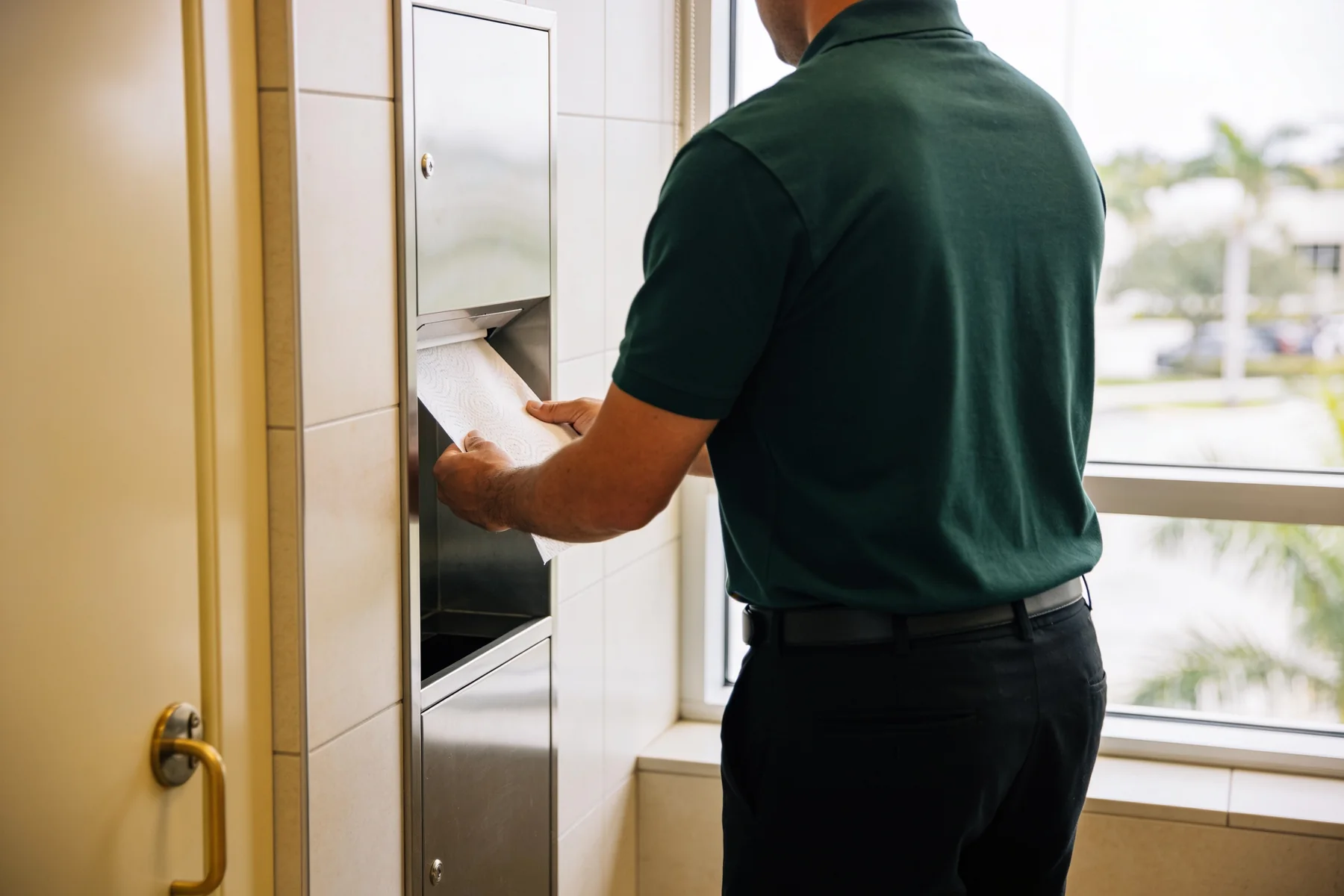
A day porter is a cleaner who works your building during operating hours rather than after it closes. They check and restock restrooms through the day, keep lobbies and common areas presentable, handle spills and hazards as they happen, disinfect high-touch surfaces, and act as a set of eyes on the building while people are in it.
The nightly crew resets the building. A day porter keeps it from falling apart between resets. Most buildings that need one have figured it out the hard way, usually after a restroom ran out of paper towels at eleven in the morning on a day that mattered.
What a day porter actually does
The work is different from a nightly clean because the building is occupied. A porter is managing a space in use rather than restoring an empty one, so the tasks are shorter, more frequent, and driven by what is happening in the building that day.
- Restroom rounds on a schedule: restock paper and soap, wipe counters and fixtures, check that nothing is out of service
- Lobby and entry upkeep: glass at handle height, entry mats, reception surfaces, exterior door fronts
- Spill and hazard response, including wet floor signage and cleanup before somebody slips
- High-touch disinfection through the day: door handles, push plates, elevator buttons, handrails
- Break room and cafe area resets between waves of people
- Trash and recycling in common areas before receptacles overflow
- Event and meeting turnaround: rooms reset between bookings
- Reporting building issues to your manager, from a burned-out fixture to a leak nobody noticed
That last one is worth more than it looks on a list. A porter is in the building all day and notices things your staff walk past.
How to tell whether your building needs one
A day porter earns their cost in buildings where the gap between nightly cleans is visible to somebody who matters. If your building empties out at five and nobody sees it again until morning, a nightly crew is probably enough. Four situations usually change that answer.
The building has visitors who are also decision makers
Club members, prospective tenants, residents walking to a board meeting, patients in a waiting room. In these buildings the state of a restroom at two in the afternoon is the impression, and nobody is going to tell you about it. They will just form an opinion.
Restrooms cannot make it a full day
This is the most common trigger and the easiest to measure. If restrooms in your building run out of supplies before closing, or if the floor by the sink is wet by lunch, nightly service is not matching the traffic. In community associations pool restrooms are the single most complained-about zone, and they are almost always a daytime problem.
The building runs events
Banquets, meetings, services, seasonal programming. Rooms have to be turned between bookings and nobody on your staff has that in their day.
Season
From November through April a Southwest Florida club, amenity center or seasonal plaza can carry several times the traffic it does in August. Plenty of buildings here need daytime coverage for half the year and not the other half. That is a normal way to scope it.
Day porter or nightly crew, or both
These are not competing options. Most buildings that use a day porter also have a nightly crew, because the two do different work. The nightly crew does the deep reset that needs an empty building: floors, full restroom cleaning, vacuuming, detail work. The porter handles the day.
Where buildings get this wrong is trying to solve a daytime problem by adding nightly hours. If your lobby looks tired at three in the afternoon, cleaning it harder at ten at night does not fix it.
How the hours get scoped
Day porter coverage is priced by hours of daytime presence rather than by square foot, which is the main way it differs from a nightly contract. Coverage ranges from a few peak hours to a full business day, and from a few days a week to seven, depending on when your building is actually busy.
In this market a day porter generally runs $25 to $45 per cleaner-hour, roughly 10 to 20 percent above a standard janitorial cleaner, because the role requires somebody presentable, reliable and comfortable working around your people. Sabal quotes a flat monthly rate for the hours after walking the building. For how the nightly side is priced, see what commercial cleaning costs in Southwest Florida.
What you should settle before signing:
- Which hours, on which days, and whether that changes in season
- The restroom round schedule, and how many rounds per day
- What the porter handles directly and what gets escalated to your staff
- Who they report to, and how you hear about what they found
- Whether coverage holds when your porter is out sick
That last question catches more companies out than any of the others.
Sabal provides day porter coverage across Southwest Florida. You can see how we scope and staff it on the day porter service page, or on the country club and gated community pages if that is your building type.
Common questions
What does a day porter do?
A day porter keeps a building presentable during operating hours. The work covers restroom rounds and restocking, lobby and common area upkeep, spill and hazard response, high-touch disinfection, trash in common areas, event turnaround, and reporting building issues to the manager.
Does my building need a day porter or just a nightly crew?
A nightly crew is usually enough for a building that empties out and is not seen again until morning. A day porter is worth it when visitors see the building mid-day, when restrooms cannot make it a full day on nightly service, or when rooms need turning between events.
How many hours a day does a day porter work?
Coverage ranges from a few peak hours to a full business day, and from a few days a week to seven. The hours should be set by when the building is actually busy, which in Southwest Florida often means more coverage from November through April.
Can a day porter replace nightly cleaning?
Usually not. The two roles do different work. Deep floor care, full restroom cleaning and detail work need an empty building, so most properties that use a day porter keep a nightly crew as well.
What is the difference between a day porter and a janitor?
A janitor typically cleans after hours on a fixed task list. A day porter works while the building is occupied, on shorter and more frequent rounds, and handles whatever the day produces, including spills, restocking and event turnaround.